

toughened glass sheet
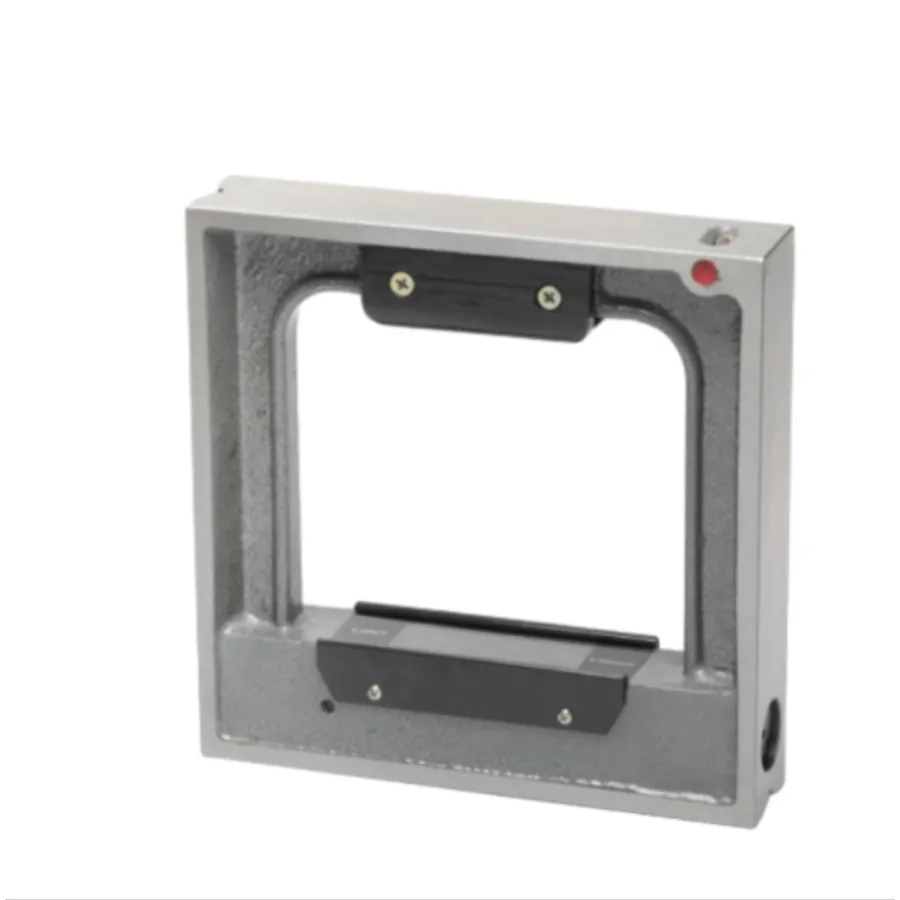
Difference between Gage and Gauge A gauge is a measuring instrument that reproduces a quantity in a fixed form. Its points are as follows. ① itself directly reproduces the unit of measure, that is, the nominal value of the gauge is the actual size of the unit of measure, such as the block itself reproduces the unit of length. Cast iron platform ② In the structure of the general lack of measurement mechanism, no indicator or moving parts. Such as the measurement block is only a physical reproduction of the unit of measure. ③ due to the lack of measurement mechanism, such as not relying on other measuring instruments, can not directly measure the measured value. For example, the block should be equipped with a kilowatt-hour meter and an optical meter. Therefore, it is a passive measuring instrument. Marble platform Gauge is a measuring instrument that converts the measured quantity into an indication or equivalent information that can be seen directly. Its points are as follows. Level (1) itself is not. The unit quantity is not the low reproduction, but the indication value or equivalent information obtained through conversion. Such as display value, digital, pulse signal, sound and so on. The conversion in the definition is a key point. For example, if the indicator value of a percentage meter is 0.01mm, the needle has a large displacement, which is realised by an amplifying mechanism. These values do not in themselves reproduce the unit value, but only the magnitude of the measured value. Pendulum Gauge ②There is a measuring mechanism in the structure, and there is an indicator or movable measuring elements such as a pointer and a cursor. Gear Runout Gauge ③ can directly measure the measured value of the object, is an active measuring instrument. In general, the gauge structure is simple, easy to operate, easy maintenance, low price, accuracy to meet the general measurement requirements. Gauge has the advantages of high sensitivity, high precision, small measuring force, but the structure is complex, expensive, and the use of environmental conditions require high. Plug & Ring Gauge
about
toughened glass sheet
The Importance of Small Hole Measuring Gauges in Precision Engineering In the realm of precision engineering, the measurement of small holes is a critical aspect that can significantly influence the quality and performance of various components. Among the tools utilized for this purpose, small hole measuring gauges play an essential role. These specialized instruments are designed to offer accurate and reliable measurements of small diameters, which can be challenging to measure with standard tools. Small hole measuring gauges come in various forms, including dial gauges, electronic gauges, and mechanical plug gauges. Each type has its unique advantages, catering to different requirements in manufacturing and quality assurance processes. The primary function of these gauges is to assess the diameter of holes ranging from a few millimeters to down to microns, making them invaluable in industries such as aerospace, automotive, and medical device manufacturing, where precision is paramount. One of the most significant benefits of using small hole measuring gauges is the reduction of errors in measurement. Traditional measuring tools can often lead to discrepancies, particularly when dealing with tiny dimensions. Small hole gauges are engineered specifically to mitigate these issues . For instance, plug gauges can provide a go/no-go measurement method, ensuring that a hole meets specific tolerances without ambiguity. This level of precision is crucial, as even minor deviations in hole size can affect the assembly and functioning of parts. small hole measuring gauge Moreover, small hole measuring gauges are designed to be user-friendly, often incorporating features that streamline the measurement process. For example, digital gauges may offer instant readings and the ability to store data for further analysis, enhancing efficiency in quality control processes. Additionally, many of these instruments are portable and easy to use, allowing engineers and technicians to conduct inspections on the shop floor, thus saving time and minimizing the need for transport to a dedicated measurement lab. The material quality of the gauges themselves is also a significant consideration. High-grade materials ensure durability and resistance to wear over time, which is essential in maintaining accuracy through numerous uses. Moreover, regular calibration and maintenance are necessary to uphold the precision of these instruments, ensuring they continue delivering reliable measurements. In conclusion, small hole measuring gauges represent an indispensable tool in precision engineering. Their ability to provide accurate, reliable measurements of tiny diameters is pivotal in maintaining product quality and performance across various industries. As technology advances, the development of these gauges continues to evolve, further enhancing their accuracy and ease of use. Investing in high-quality small hole measuring gauges is, therefore, a critical step for any organization committed to excellence in manufacturing processes.
-

High quality industrial productsagement

High quality industrial products
View Details -

Meet the diverse needs of customers

Meet the diverse needs of customers
View Details -

Strict quality control

Strict quality control
View Details -

Top raw materials

Top raw materials
View Details -

Trusted supplier

Trusted supplier
View Details
Our application


news and information
y type suction strainer
Understanding Y-Type Suction Strainers A Comprehensive Guide In various industrial applications, mai
válvula de retenção do pistão
Válvula de Chegada com Pistão Um Componente Essencial na Indústria As válvulas de chegada, especialm
What is a Spline Ring Gauge_ Understanding Its Role in Precision Measurement
In the world of precision engineering and manufacturing, accurate measurements are the foundation fo
 English